
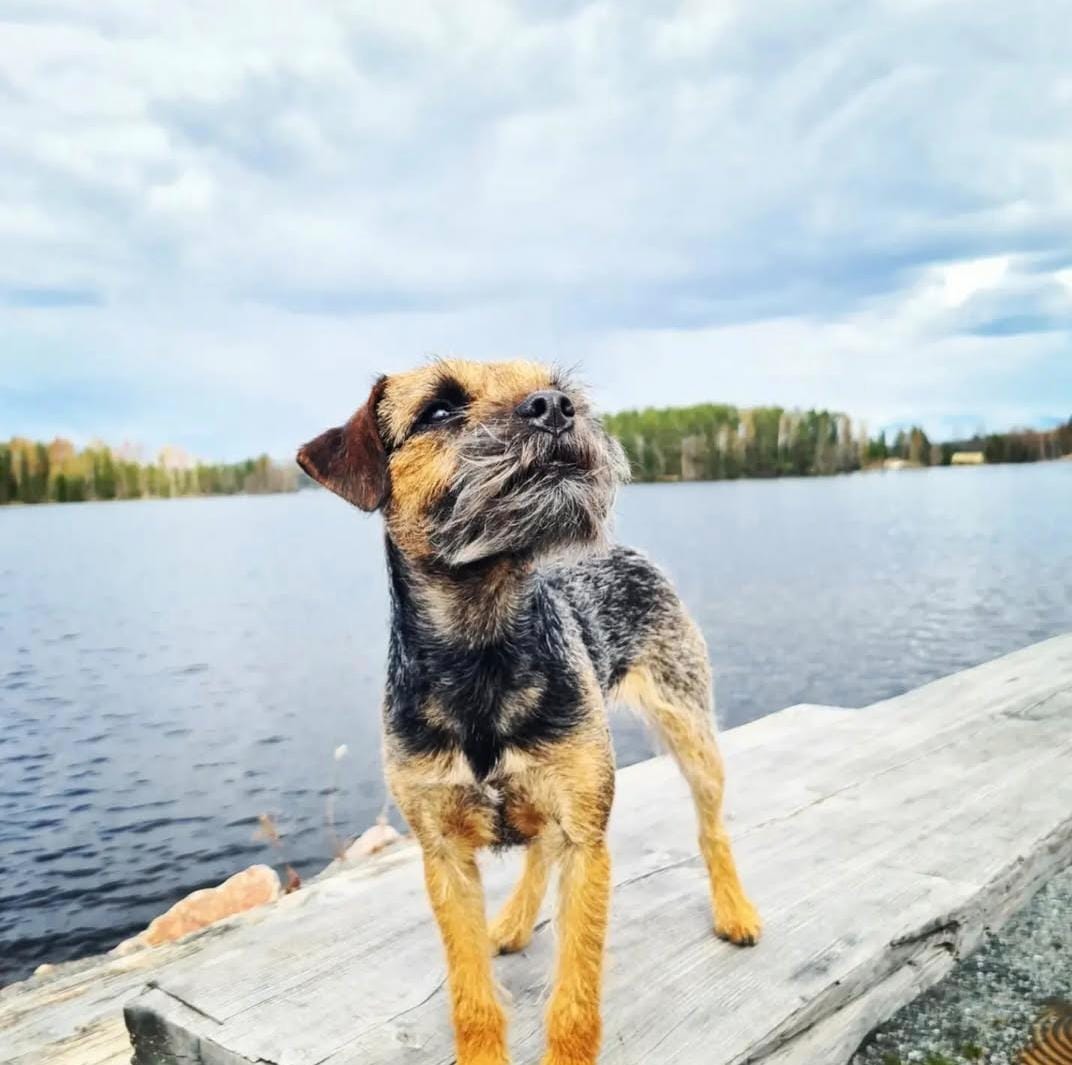
The Border Terrier
The Border Terrier is a small breed originating in Great Britain, along the border between England and Scotland. Bred to hunt the fox, it is a hardy, courageous and deeply affectionate dog. It makes an ideal family companion and adapts well to life in a flat, provided it gets regular exercise. It is an intelligent dog, easy to train and strongly attached to its owner.
A Brief History
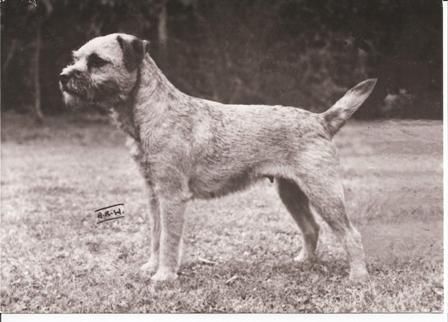
The Border Terrier emerged in the Anglo-Scottish border country at the end of the 17th century. Its origins are shared with other terriers of the region, among them the Lakeland, the Dandie Dinmont, the Bedlington and the white-coated Redesdale, now extinct. It was originally bred for earth work and for hunting and controlling vermin around the farms.
Official recognition by the English Kennel Club came only in 1920, but as early as the late 1800s these dogs were found not only on the farms, where they were valued for the work their hunting instincts allowed them to do, but also in the rings of local agricultural shows, where they were given classes of their own. Registrations then grew steadily under the heading "any other variety of British, Colonial or Foreign Dogs not classified", until, after considerable pressure, the breed was officially recognised in 1920. From that moment its popularity grew well beyond the borders of Great Britain, reaching America and Northern Europe, where it was warmly received and widely established.
Why a Border Terrier?

Admirers of the lively and agile Border Terrier value its reputation as a tenacious, no-nonsense working terrier. Courageous, cheerful and affectionate, these dogs are much-loved companions, at home in the city as well as in the countryside.
Standing between 28 and 40 cm at the withers, Border Terriers are set apart from other small terriers by the distinctive shape of the head, which enthusiasts describe as otter-like. Another distinguishing feature is the length of leg, greater than in other small terriers. The harsh coat needs little grooming and comes in grizzle and tan (in lighter or darker shades), blue and tan, wheaten (now all but vanished) and red.
Though described as remarkably tough and tireless at work, in the home they prove gentle, affectionate and easy to train. Borders love exploring the outdoors and are excellent playmates for children. Bred as country dogs, they nonetheless settle well into city life provided they get plenty of exercise, and they generally get on with other dogs when well socialised.
Breed Standard
Origin: Great Britain.
Date of publication of the official valid standard: 24.06.1987.
Utilization: Terrier.
FCI classification: Group 3 Terriers. Section 1 Large and medium-sized terriers. Without working trial.
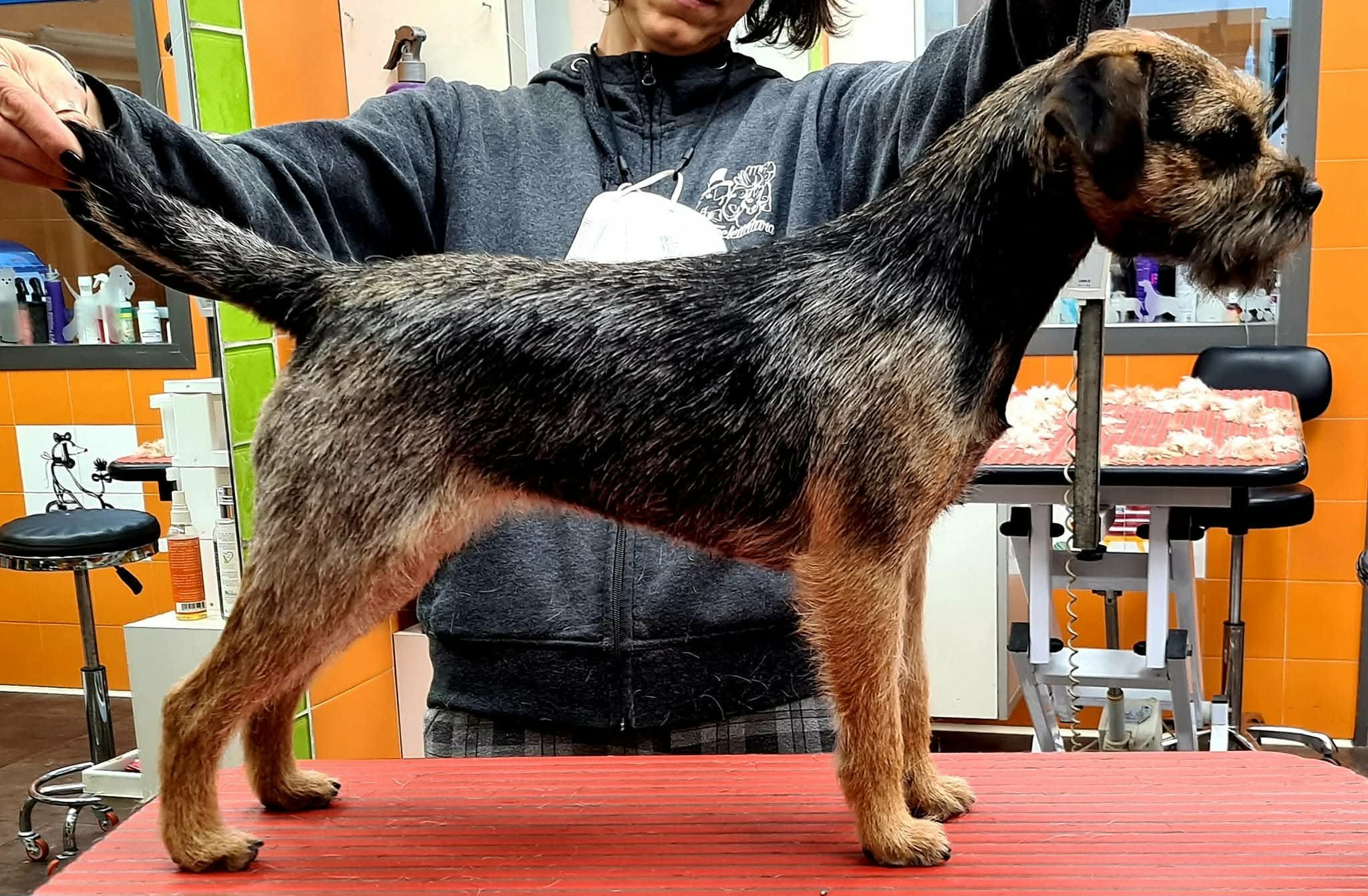
General appearance: Essentially a working terrier. Capable of following a horse.
Behaviour / Temperament: Combining activity with gameness.
Head: Head like that of an otter.
Skull: Moderately broad.
Nose: Black nose preferable, but liver or flesh-coloured one not a serious fault.
Muzzle: Short, strong.
Jaws / Teeth: Scissor bite, i.e. upper teeth closely overlapping lower teeth and set square to the jaws. Level bite acceptable. Undershot or overshot a major fault and highly undesirable.
Eyes: Dark with keen expression.
Ears: Small, V-shaped, of moderate thickness, and dropping forward close to the cheek.
Neck: Of moderate length.
Body: Deep, narrow, fairly long.
Loins: Strong.
Chest: Ribs carried well back, but not oversprung, as a terrier should be capable of being spanned by both hands behind the shoulder.
Tail: Moderately short; fairly thick at base, then tapering. Set high, carried gaily, but not curled over back.
Forequarters: Forelegs straight, not too heavy in bone. Forefeet small with thick pads.
Hindquarters: Racy. Hind feet small with thick pads.
Gait / Movement: Has the soundness to follow a horse.
Skin: Must be thick.
Hair: Harsh and dense; with close undercoat.
Colour: Red, wheaten, grizzle and tan, or blue and tan.
Weight: Dogs 5.9–7.1 kg (13–15 ½ lbs); bitches 5.1–6.4 kg (11 ½–14 lbs).
Faults: Any departure from the foregoing points should be considered a fault and the seriousness with which the fault should be regarded should be in exact proportion to its degree and its effect on the terrier's ability to work and on the health and welfare of the dog.
Disqualifying faults: Aggressive or overly shy dogs. Any dog clearly showing physical or behavioural abnormalities.
N.B.: Male animals should have two apparently normal testicles fully descended into the scrotum. Only functionally and clinically healthy dogs, with breed typical conformation should be used for breeding.
FCI-Standard N° 10 / 12.03.1998
Dog Sports
Besides their natural aptitude for hunting, our Border Terriers are active, versatile dogs, often taking part in sporting disciplines such as Agility, Hoopers, Obedience and scent work. Sport strengthens the bond between dog and owner, and keeps our dogs happy and healthy.